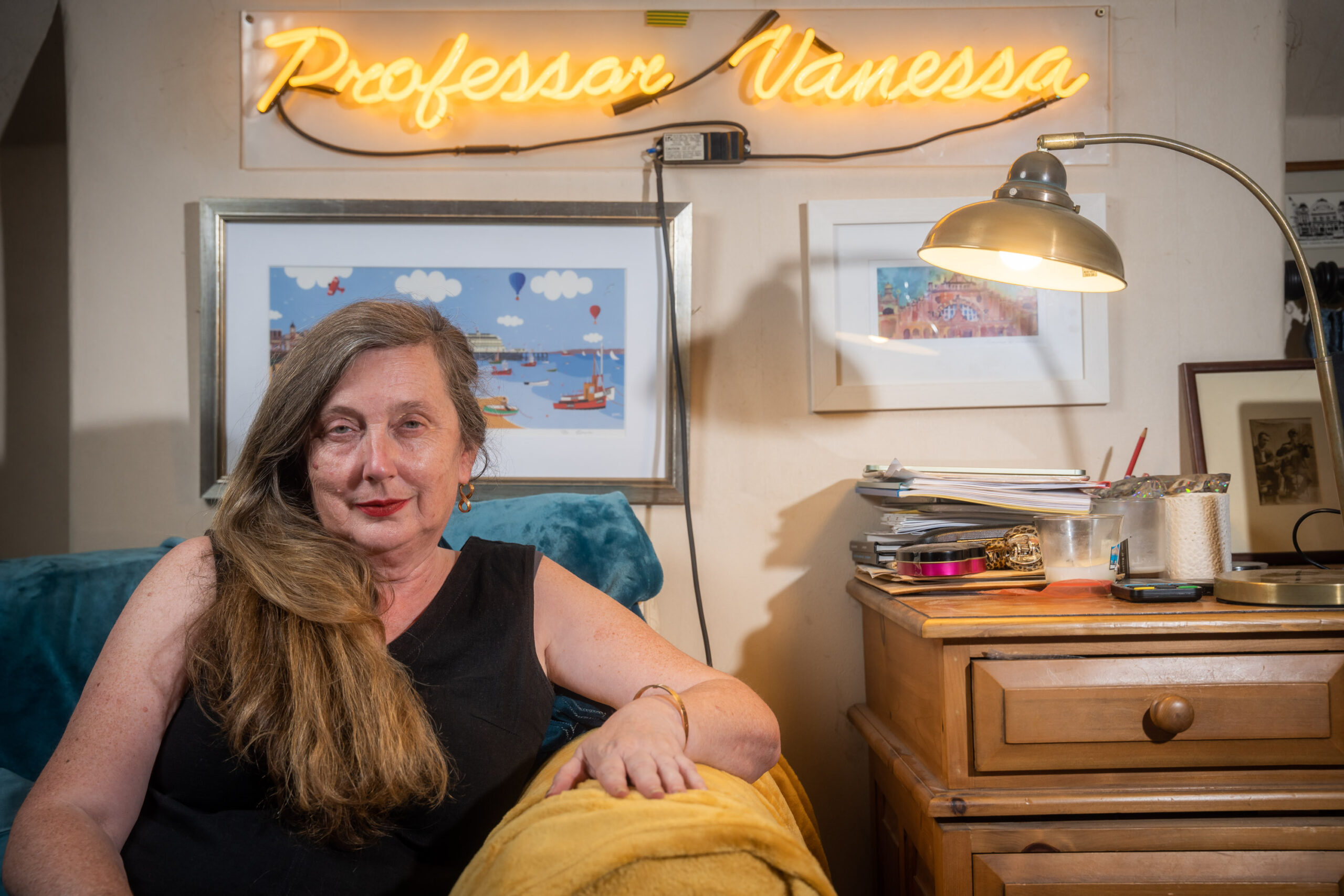
Professor Vanessa’s final chapter
This year’s Off the Shelf Festival marks the end of an extraordinary era. A decade ago, the University of Sheffield saved the festival amid local authority financial pressures. Since then, Professor Vanessa Toulmin has led the Off the Shelf team with singular vision and passion, taking the much-loved Sheffield institution from strength to strength.
Books have been Vanessa’s “happy place” since her childhood growing up in a travelling community. They have shaped her worldview, served as a constant companion and guided her through her many remarkable achievements, from becoming the first academic awarded a Personal Chair in Early Film and Popular Entertainment to saving Morecambe’s iconic Winter Gardens from ruin.
We sat down with Vanessa to reflect on a role she calls the “greatest gift,” charting the festival’s highs and lows over the past decade and discovering what she’s most excited for in her final year at the helm.
As we approach the festival’s milestone 35th edition, how has the festival evolved in your ten years as Director?
Off the Shelf was already a very well-respected and much-loved institution when we took over. There were probably over a hundred events each year, to some extent shaped by the various political pressures it had faced since its humble beginnings in local libraries.
We reshaped the festival, bringing in curators from all walks of life to freshen things up, alongside the world-leading academic expertise we have at our disposal at the University. Operating the festival within the structure and guidance of the University made total sense. We are an institution that produces writers, thinkers and scholars who use words for social and political expression.
We streamlined it down to a core of about 50 – 60 ticketed events, plus some free online talks and podcasts, hosted on the University of Sheffield Player. Generating revenue with a handful of big name sell-out events gives us the freedom to subsidise a variety of other events featuring local writers, up-and-coming talent and underrepresented voices who might not otherwise get a platform.
We are also constantly competing with large commercial promoters who charge a lot more for tickets for events featuring the same writers. For many people in Sheffield, that higher price point is completely unaffordable and it excludes half the city. Keeping prices fair remains central to our mission.
What has been the biggest challenge the festival has faced during your leadership?
The biggest challenge for any festival is managing freedom of speech and balancing that against political agendas or strong personal beliefs. We believe strongly in freedom of speech and the right for people to have a platform to speak out, and while you can anticipate certain issues from experience, you never quite know what is going to upset people.
We always strive to remain neutral. If an event covers a topic that people are passionate about – like the Sheffield street tree felling controversies – people have a right to discuss it. On a practical level, we also have to evaluate whether an event will sell tickets and cover its costs.
Events that sell out can often surprise you, while other high-profile topics you’d expect to do well might not draw an audience locally. We’ve found that, among other things, anything related to world politics, niche politics or the environment tends to sell well. Sheffield has always been a politicised city with a radical streak, and it has a deep connection to nature with the Peak District on our doorstep, so this perhaps doesn’t come as a surprise.
Handling this seems to be a delicate balance. Could you share an example of how you manage those situations on the ground?
A great example was Chris Packham in 2024. He had spoken out online about issues prior to his appearance, which sparked interest from various environmental groups. Several of them wanted to hand out flyers at the venue, including pro-badger advocacy groups. We had to remain neutral, but we also wanted to handle it constructively.
I took the various flyers directly to Chris before the event. As the speaker, he reviewed them and decided to highlight the badger conservation flyer during his talk. He told the audience, “This is really important, and you can pick up a flyer on your way out”. It was a great compromise that respected the author, kept the peace and avoided conflicts outside the venue.
What events from this year’s programme are you most looking forward to?
Every year as part of the programming process the team and I go to London to meet with publishers. There were two books in particular that I really pushed for:
Middle-Aged Women get Sh*t Done by Lucy Porter – I loved this because the women running Off the Shelf are living examples of this phrase. My mother used to say “If you want something done, ask a busy woman”.
The Brass Band Story by Trevor Herbert – Brass bands are so deeply rooted in Sheffield culture. When we were in London and the publishers were preparing a big pitch, I told them, “You don’t need to pitch it – we’re taking it”.
Beyond that, we’ve got a fantastic mix this year. I’m honestly excited for all of it, but here are a few highlights I’m particularly looking forward to:
Queen James by Gareth Russell – A brilliant piece of queer history exploring how 19th-century historians deliberately edited historical narratives.
This is Rebel Grrrls: The Real story of Women and Punk by Molly Tie – A fascinating exploration of women in music and rebel culture.
An Expert Witness by Professor Sue Black: As well as being the UK’s leading forensic scientist, Sue Black is an extraordinary human being and academic whom I admire immensely.
Nocturnes by Susan Tomes: A left-field choice, but having such an amazing pianist speak and play on a University of Sheffield Concerts Steinway piano is a rare treat.
Lo0king back over the last ten years, is there an event that stands out as particularly memorable or meaningful to you?
One event that stands out deeply on a personal level was in 2024 when Jane Cholmeley came to speak about her book, A Bookshop of One’s Own, which is about the Silver Moon feminist bookshop in London. When I was 18, I bought Women of Ideas by Dale Spender at Silver Moon. Reading that book had a completely transformative effect on my life – it introduced me to hundreds of remarkable women in history and set me on the path to becoming an academic. The event really felt like a full circle moment.
Off the Shelf feels like the creative spring that flowed from that first drink I took as an 18-year-old at Silver Moon. Books are at the heart of everything I love.
Running the festival these past ten years really has been the greatest gift. If I’d run a literary festival 30 years ago, it would have been a total disaster; the experience I’ve gained over the years has made all the difference.
Fittingly, your final event as Director, Tripping the Neon Fantastic, covers a topic close to your heart. What can people expect from your talk?
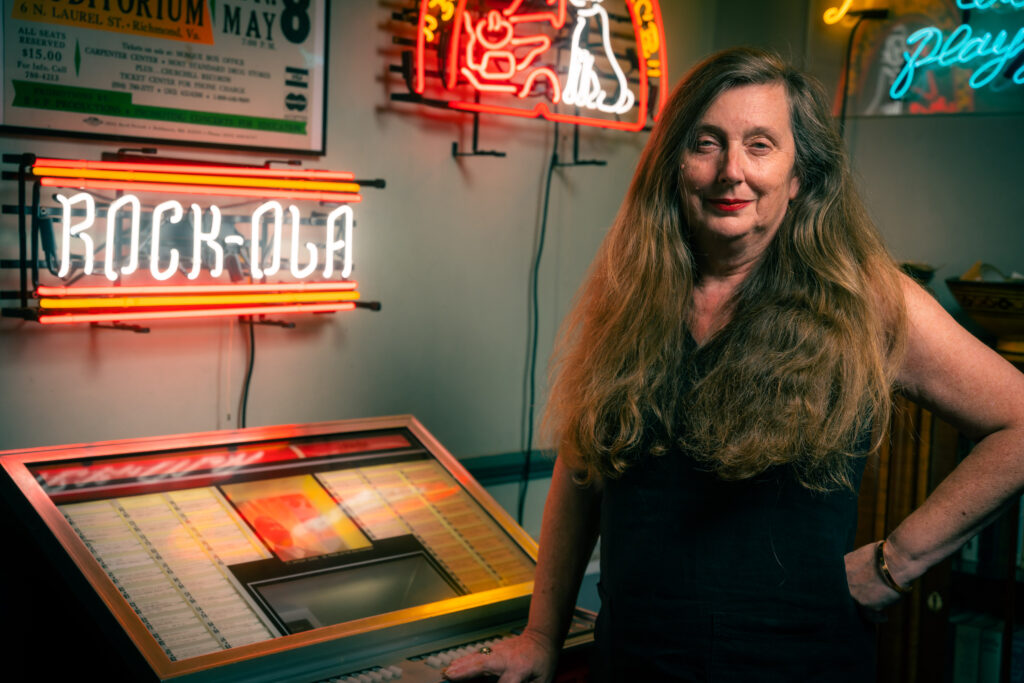
People wanted me to do a talk on the circus or something else I’m more well known for, but I decided to cover a subject people might not know I’ve been researching for the last ten years: the history of neon. It’s almost an obsession of mine.
Neon links architecture, popular culture and history. Plus, the inventor of neon lighting had a bizarre life story involving fairgrounds, sci-fi, pop culture and nazi sympathisers. In a way, it sums up a lot of the work I’ve done over the past 20 years.
My talk isn’t a complete academic history of neon – since I haven’t written the book yet – but a showcase of this fascinating world I’ve been collecting and researching.
What is the single most important piece of advice you would pass on to those leading Off the Shelf in the future?
Programme for your audience, not for yourself. Just because you personally love an author doesn’t mean they will sell tickets.
Off the Shelf isn’t just a student or university festival – it’s a broad literature and words festival for the entire city and beyond. It takes experience to realise that established, Booker-nominated writers might not sell tickets unless they hit a specific moment of mainstream breakout success, like Bernardine Evaristo did after winning the Booker Prize.
And to the Off the Shelfers who’ve been coming for years and those dipping a toe for the first time, my message is simple: use it or lose it. If the Sheffield community wants to keep this wonderful festival running for another 35 editions, support the events, buy the tickets and keep the festival alive for generations to come.
News